
Salt pool maintenance
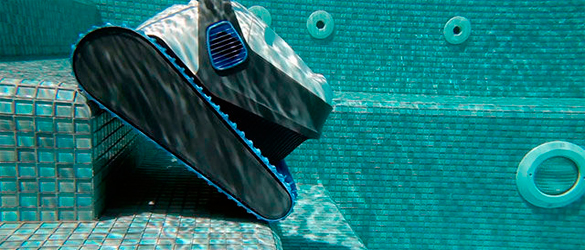
He salt pool maintenance It is very simple. However, if we want the chlorinator to last as long as possible so that the water is ideal, we have to check the levels and clean them as well. For him salt pool maintenance We must review what we are going to tell you next.
HOW TO MAINTAIN SALTY POOLS
CLEANING
As with chlorine, you will have to clean the leaves and insects that have accumulated in the skimmers every day. For a correct salt pool maintenance you have to clean the cell. Every month or month and a half, you will have to check that the cell is clean and checking that the metal electrodes are clean and in good condition.
CONTROL THE pH
You will need to measure the pH of the water every morning because salt chlorination deteriorates more quickly, chlorine vapor increases and the skin and eyes become irritated. The solution is to introduce raising liquid (pH+). If the pH is high: the disinfectant loses its effectiveness and is consumed more, algae abound, and the skin and mucous membranes are also irritated. The answer is to introduce reducing liquid (pH-).
FILTERED OUT
Connect the purifier for about 6 hours each day. If the measurement of pH or chlorine levels shows alterations, you may have to leave it running longer.
CHECK THAT THERE ARE NO AIR INLETS

Usually a leak causes air to enter and water to escape, but this cannot always happen. If when you stop the treatment plant, the pipes are discharged, there is a problem. Even if it happens naturally, for example, when the delivery jets are not submerged, allowing air to enter.
There is another case that can happen with some types of sand filters since, if the gasket is not properly seated, when the pump is removed, the pressure itself causes it to seat and seal correctly. However, when the pump stops, the seal separates and allows air to enter.
CHECK THAT CHLORINE IS PRODUCED
Another guideline for salt pool maintenance is to check that chlorine is produced and it is very simple. You only have to measure a sample of water directly from the drive jets, and another at the other end of the pool. Make sure the chlorinator is getting a 100%.
The difference must be notable, demonstrating that the jets bring a lot of chlorine, which corresponds to that generated by the chlorinator. If we do not notice this difference, we must check if the chlorinator is stopped or was not generating at the time of measurement. In very large pools with a lot of water flow, it is more difficult to notice the difference between the two samples.

 English (UK)
  Español
  Català